Milan · Como · Since 2010
When enterprises evaluate an SMS hardware gateway, they are not simply choosing a device.
They are selecting a messaging architecture that may support authentication systems, IoT infrastructure, operational alerts and mission-critical workflows.
The real decision is architectural — not hardware-based.
This article examines the different SMS hardware gateway models available today and explains why hybrid enterprise messaging architecture is increasingly becoming the preferred approach.
Understanding the SMS Hardware Gateway Model
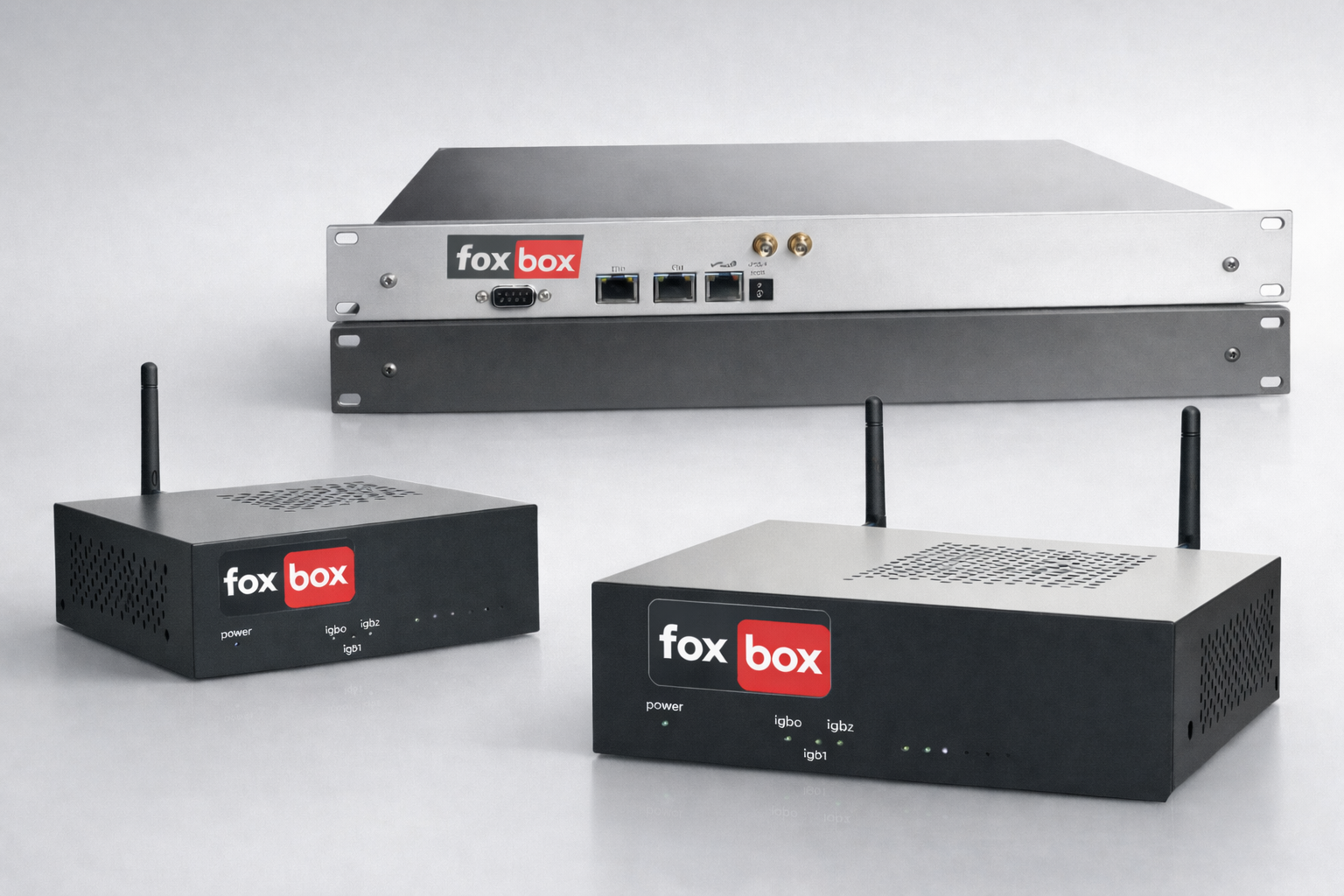
An SMS hardware gateway is a physical appliance equipped with one or more SIM modems that enables organizations to send and receive SMS directly through mobile carrier networks.
It is commonly deployed:
- On-premise
- Inside secured network environments
- In industrial facilities
- In regulated sectors
Unlike cloud-only messaging APIs, a hardware SMS gateway allows full local control over SIM-based routing.
However, hardware alone does not automatically guarantee enterprise scalability.
The Three Main SMS Gateway Architectures
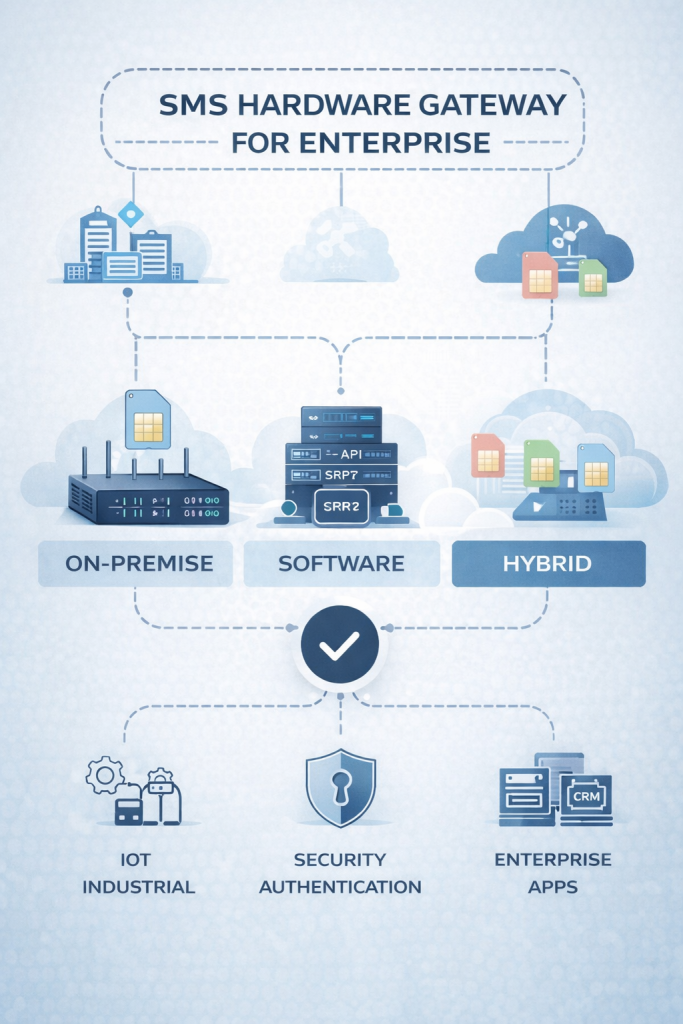
Enterprises evaluating SMS infrastructure typically compare three models:
1️⃣ Appliance-Based SMS Hardware Gateway
These are plug-and-play devices that:
- Operate with physical SIM cards
- Route SMS locally
- Support two-way messaging
- Require internal network integration
Advantages:
- Infrastructure sovereignty
- Local routing control
- Reduced external dependency
Limitations:
- Scalability tied to number of SIM modems
- Limited global delivery optimization
- Hardware capacity constraints
2️⃣ Software-Based SMS Gateway Platforms
Software-driven SMS gateway solutions can integrate with:
- GSM modems
- SMPP providers
- Telecom operators
Advantages:
- Flexible configuration
- Protocol-level customization
- Suitable for integrators
Limitations:
- Requires technical maintenance
- Redundancy must be architected
- Scalability depends on server infrastructure
3️⃣ Hybrid Enterprise SMS Gateway Architecture
Modern enterprise environments increasingly adopt a hybrid SMS gateway model combining:
- On-premise SMS hardware gateway
- Cloud-based enterprise SMS API
- Carrier redundancy
- Intelligent routing
This architecture provides:
- Local control
- Global scalability
- Failover protection
- High deliverability performance
Hybrid messaging bridges the gap between hardware control and cloud scalability.
Why Hardware Alone Is No Longer Enough
While SMS hardware gateways offer control and independence, enterprises operating at scale must also consider:
- High-volume message bursts
- International delivery
- SLA-backed uptime
- API integration for CRM and ERP systems
- AI-driven automation triggers
A purely hardware-based SMS gateway may struggle when:
- Volume spikes occur
- Cross-border routing is required
- Advanced retry logic is necessary
Hybrid infrastructure addresses these limitations.
Enterprise Use Cases for SMS Hardware Gateway
An SMS hardware gateway is particularly valuable in environments where:
- Regulatory frameworks require on-premise routing
- Industrial IoT systems rely on GSM fallback
- Remote facilities have limited broadband
- Data sovereignty policies restrict cloud routing
Typical sectors include:
- Manufacturing
- Energy
- Logistics
- Financial services
- Government infrastructure
Integration with Enterprise Systems
Modern SMS hardware gateway deployments must integrate with:
- ERP platforms
- CRM systems
- Authentication servers
- Monitoring systems
- AI automation engines
RESTful APIs and webhook-based communication are essential for embedding SMS into digital workflows.
When hardware gateways integrate with enterprise SMS APIs, they become part of a resilient messaging ecosystem.
Comparing Enterprise SMS Hardware Gateway Models
| Feature | Appliance Model | Software Model | Hybrid Model |
|---|---|---|---|
| On-premise control | ✔ | ✔ | ✔ |
| Cloud scalability | ✖ | Limited | ✔ |
| Carrier redundancy | Limited | Custom | Native |
| Global routing | Limited | Configurable | Optimized |
| SLA-backed infrastructure | Internal | Custom | Enterprise-grade |
| AI automation readiness | Limited | Depends | Designed for it |
Hybrid architecture delivers the most balanced approach for enterprise IT.
Strategic Considerations for CTOs
When evaluating an SMS hardware gateway, decision-makers should assess:
- Scalability requirements
- Redundancy strategy
- Integration capabilities
- Compliance constraints
- Future AI and automation plans
SMS is increasingly part of authentication, fraud prevention and operational automation.
Choosing the wrong architecture can create operational bottlenecks.
The Hybrid Advantage for Modern Enterprise Messaging
Enterprises no longer operate in isolated infrastructures.
They require messaging systems that:
- Operate locally when needed
- Scale globally when required
- Integrate securely with APIs
- Support automation and AI agents
A hybrid SMS hardware gateway strategy ensures:
- Business continuity
- Operational resilience
- Infrastructure flexibility
- Long-term scalability
Conclusion
An SMS hardware gateway remains a valuable component of enterprise messaging infrastructure.
However, hardware-only models may not meet the demands of modern, distributed and automation-driven organizations.
The future of enterprise SMS is not purely on-premise.
It is not purely cloud.
It is hybrid.
Organizations evaluating SMS infrastructure should prioritize architectural flexibility over device features.
Because in mission-critical communication, architecture determines reliability.
🔎 Evaluate Your Messaging Architecture
If your organization is reviewing SMS hardware gateway solutions and considering hybrid deployment models, our technical team can help you design a scalable and resilient architecture tailored to your enterprise environment.